Tutorial Purgatory
4 min read
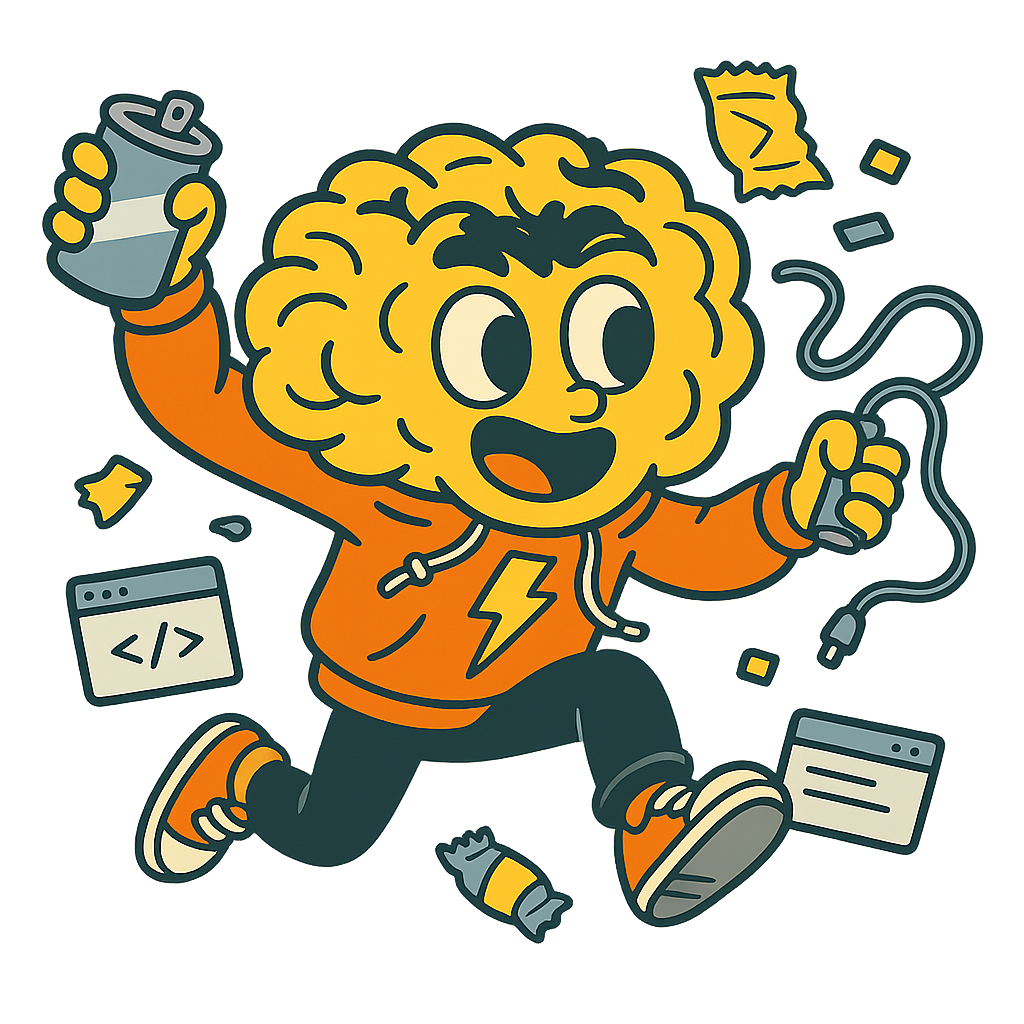
Zap:
I swear I’m learning… don’t check my GitHub.
Intro
You know that moment when you start a new tutorial and think, "This time I’ll actually finish it"? Cut to three hours later, you’ve signed up for another course because the first one used an older version of React, and suddenly you’re knee-deep in a YouTube playlist about TypeScript generics. Meanwhile, your side project idea is still sitting in a dusty Notion page called "Big Brain App."
For ND brains, tutorials are catnip. They feel safe, structured, and oh-so-dopamine-y. But there’s a trap: if you’re always "learning," you never quite hit the scary part of building. That’s when Tutorial Purgatory sets in endless courses, zero commits.
The good news? There is a way out. And it doesn’t involve deleting your Udemy account (don’t worry, we know you’ll never log in again anyway).
Escaping the infinite loop of "just one more course"
So, you’ve just signed up for another course. It was only £12.99 on sale, it promised to make you a "10x developer in 10 days", and honestly, who can resist that shiny new-framework smell? Fast-forward 40 minutes: you’re watching the same instructor explain what npm init does for the seventh time in your life. Your brain whispers, "This is productive." Your repo folder whispers back, "Really though?"
Why tutorials feel so good
For neurodivergent brains, tutorials hit all the sweet spots. They're structured, linear, and come with clear dopamine breadcrumbs: video complete, checkbox ticked, progress bar go brrr. Compared to the messy reality of actually building something where requirements change, bugs appear, and you have to make decisions with no answer key, tutorials feel safe.
It’s not laziness. It’s our wiring. Tutorials mimic the kind of feedback loops our brains crave. You do the thing, you get a gold star, you level up. Actual projects? They throw you into the wilderness without a map, and suddenly you’re wondering if you should have multiclassed into cartographer.
The hidden cost
But here’s the catch: tutorials can trick you into feeling like you’re moving when you’re actually stuck. It’s like running on a treadmill sweat everywhere, but you’re still in the same room.
Real talk: how many times have you:
- Watched three different JavaScript "basics" playlists, but still Googled how map works.
- Finished a React crash course, only to realize you never actually built your own component from scratch.
- Followed a full HTML/CSS tutorial, but froze when it came time to design your own layout.
That’s the purgatory. You keep stacking knowledge blocks but never glue them together into something messy and real. And the longer you stay in that loop, the scarier it feels to leave. For ND devs, this lands heavy because the gap between "safe structured learning" and "scary messy building" can trigger perfectionism, rejection sensitivity, or flat-out executive dysfunction. So we circle back to the comfort of the next tutorial.
Sneaking your way out
Good news: you don’t have to swear off tutorials forever. The trick is to use them like seasoning, not the whole meal. Here’s how:
- Stop at 70%. If you get the gist, pause the video and try building it on your own. Yes, it feels uncomfortable. That discomfort is your brain actually learning, not just copying.
- Project-first, tutorial-second. Pick a tiny project idea (not your dream SaaS, just a mini "what if" build). Dip into tutorials only when stuck. Suddenly, the tutorial is a reference book, not a babysitter.
- Set "exit ramps." Decide ahead of time: "I'll watch three modules, then switch to building." Otherwise, six hours later you’ll find yourself enrolled in an AI-for-kids course you didn’t mean to buy.
- Mix & match. Use one tutorial for setup, another for styling, and then… stop. Frankenstein learning helps you realize there are multiple valid ways to do things, not just "the course way."
- Ship something tiny. Doesn’t have to be polished. Doesn’t have to be unique. Doesn’t even have to be public. The act of finishing a thing resets your brain out of purgatory.
Loving the loop (without getting stuck)
Tutorials aren’t evil. They’re part of learning. The trick is remembering they’re a starting line, not the finish line. That dopamine rush from finishing a course? Imagine stacking it with the rush of pushing actual code into the wild. Suddenly, the dopamine isn’t just virtual XP, it’s a badge you can show off.
And here’s the secret: you don’t lose what you’ve learned in tutorials once you start building. It comes with you. That Next.js course you half-finished? Still useful. That React Native bootcamp you abandoned? Still in your muscle memory. None of it was wasted. The only waste is never leaving tutorial mode.
So next time you catch yourself in the endless scroll of Top 10 JavaScript Tutorials of 2025" remember: your brain loves shiny checkboxes, but your creativity lives in the messy unknown. The scariest tab you can open is a blank index.tsx. It’s also the one that gets you out
Closing Thoughts
Tutorials will always be there, like a warm blanket of checkboxes and progress bars. The trick is remembering that your real progress shows up when you take even the tiniest step into building.
One scrappy little project is worth more than five finished playlists.
So go ahead, close that tab (just one of them), and open a blank file. It doesn’t have to be perfect. It just has to exist. That’s your ticket out of purgatory.
Until Next Time
See you next time,
Simen (with Zap still insisting they’re "almost certified" in seven frameworks)
Your thoughts make this newsletter better.
Did something click? Was a concept confusing? Your feedback helps shape future issues for thousands of other neurodivergent devs. We read every single comment.
👏The Snacks
Stop tutorials at the first " aha " moment and try it yourself. You’ll forget less and learn faster when your brain struggles a little.
CodeSandbox — spin up a project in seconds without worrying about setup. Great for jumping from “watched it” to “built it.”
The word " tutorial" comes from the Latin tutor , meaning "guardian" or "watcher." Which makes sense… except ours don’t stop watching. Ever.
You don’t need to finish every course to be enough. The knowledge you already carry is real, and it grows every time you try.